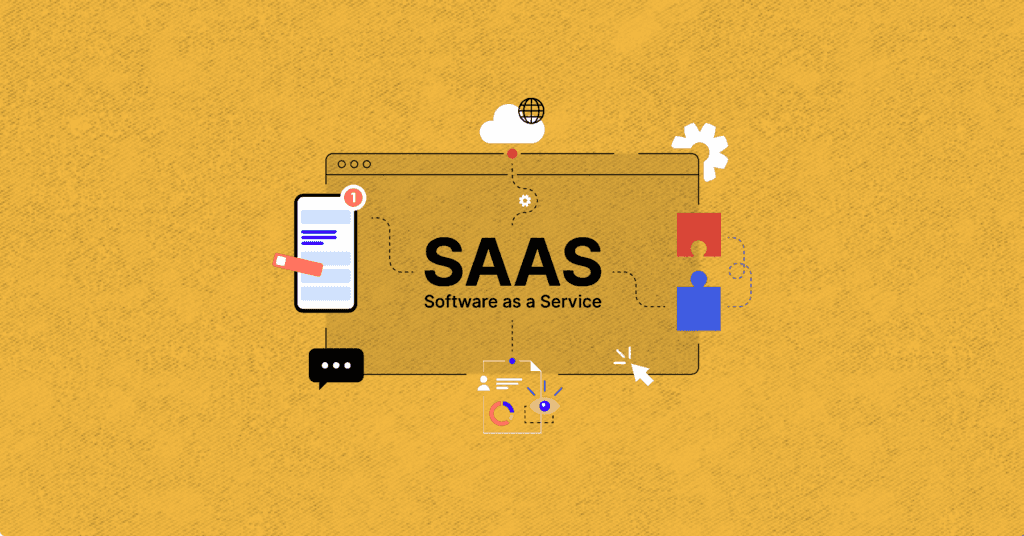
SaaS stands for Software as a Service. Instead of buying software and installing it on your computer or server, you access it over the internet through a subscription. The software runs in the cloud and is maintained by the provider, not you.
You almost certainly use SaaS every day without thinking about it. Gmail, Google Docs, Zoom, Slack, Shopify, and Salesforce are all SaaS products. You log in, use them, and the provider handles everything else: servers, updates, security, and infrastructure.
For businesses, SaaS has fundamentally changed how software is bought, deployed, and scaled. Instead of a large one-time investment and a long implementation process, companies subscribe monthly or annually and can be up and running in hours.
This guide covers everything you need to know about SaaS in 2026: what it is, how it works, the main types, pricing models, benefits, limitations, and how to choose the right platform for your business.
First, an explanation of the concept of Software as a Service (SaaS)
The term Software as a Service (SaaS) or what is known in short as SaaS expresses a model for simplifying software in which applications are hosted by a specialized service provider and then provided to users over the Internet, easily accessible from anywhere and at any time across different devices without any complex programming issues.
Simply put, all you have to do is choose the application or software you want and start using it directly without any complex programming setup.
From an e-commerce perspective, Software as a Service refers to the use of cloud-based platforms and applications to manage e-stores and control all operational processes without the need to invest in complex technical infrastructure.
The most prominent examples of these platforms and applications that offer Software as a Service are Zid, Salla, ExpandCart, Shopify, and others.
How Does SaaS Work?
Understanding how SaaS works helps you make better decisions about which tools to adopt and how to use them effectively.
Cloud Hosting:
The software lives on the provider's servers, not yours. This means you do not need to buy hardware, manage servers, or worry about physical storage. The provider handles all of that.
Internet Access:
You access the software through a web browser or a dedicated app. As long as you have an internet connection, you can use the software from any device, anywhere in the world.
Subscription Model:
Instead of a one-time purchase, you pay a recurring fee, typically monthly or annually. This gives you access to the software, all its updates, and usually a level of customer support. You can scale up or cancel your subscription as your needs change.
Automatic Updates:
The provider releases updates, security patches, and new features automatically. You always use the latest version of the software without doing anything.
Multi-Tenant Architecture:
Most SaaS products serve many customers from the same shared infrastructure. Each customer's data is isolated and secured, but the underlying system is shared. This is how providers keep costs low and scale efficiently.
API Integrations:
SaaS tools connect with each other through APIs (Application Programming Interfaces). This allows your CRM to sync with your email tool, your e-commerce platform to connect with your
There are several types of integration operations for platforms operating on the SaaS system, which we mention in the following paragraph:
Types of Software as a Service platform integration
Data Integration:
It aims for the smooth flow of data across different systems through the application of various technologies such as:
Batch Integration which means transferring data between systems at specific time intervals.
Real-Time Integration which means transferring data immediately upon changes occurring in one of the integrated platforms with others.
Process Integration:
This type of integration aims to maintain smoothness and effectiveness in executing processes through the application of technologies such as:
Workflow Integration technology to link processes between different systems.
Event-Driven Integration technology which relies on systems responding to events or changes occurring in other systems.
Application Integration:
Which is done through the use of Application Programming Interfaces (APIs) to facilitate communication and interaction between different applications.
Web Services Integration:
Which relies on the use of protocols such as SOAP and REST to integrate applications and services across the web.
Examples of some commonly used SaaS applications
There are many Software as a Service applications around us, including, for example:
Google Workspace
It is an integrated cloud solution from Google that includes tools such as Gmail, Google Docs, Google Sheets, Google Meet, and Google Drive. This system allows users to create documents, spreadsheets, presentations, and communicate with their teams easily from anywhere in the world.
Salesforce
It is one of the most prominent commonly used SaaS applications in the field of Customer Relationship Management (CRM), and is used by companies to track the customer journey from initial interaction to after-sales, in addition to gathering all customer data in one place to make it easy for sales and marketing teams to provide personalized and effective service.
Slack
It is a cloud application designed to enhance communication within organizations, and is considered a more effective alternative to internal email. It enables teams to create channels for specific projects, communicate in real time, share files, and conduct voice and video calls, in addition to creating small knowledge bases within channels by pinning important messages or using pinned notes.
Shopify
It is a famous SaaS platform for creating e-stores, enabling entrepreneurs to launch their own store, manage products, track orders, and execute payment and shipping processes without the need for programming skills. Shopify provides powerful tools for digital marketing, linking with social networks, and full customer service support. The platform also contains a huge knowledge base directed at sellers, including detailed guides, articles, and videos to help them achieve success.
Notion
It is a flexible and easy-to-use application used for creating notes, organizing projects, and tracking goals. It is characterized by its ability to create customizable pages, which are used to document tasks and build internal knowledge bases that facilitate access to information for teams.
Zendesk
It is one of the cloud-based Software as a Service applications, and helps companies provide distinguished customer service through email, chat, mobile, and social media, from a single control panel. Zendesk provides a dynamic knowledge base for customers, allowing them to find answers themselves without the need to contact the support team, which reduces pressure and increases customer satisfaction, and also supports performance analysis tools and tracking quality indicators in service delivery.
Why is Software as a Service important for commercial businesses?
The importance of SaaS (Software as a Service) to various brands and organizations is due to many reasons, including:
Reduced Cost:
Software as a Service (SaaS) offers a more flexible economic model compared to traditional software. Instead of paying huge costs for developing and updating software, companies can subscribe to SaaS services and pay monthly or annual fees, which leads to reduced expenses for the commercial activity and focusing on directing financial resources towards growth and development.
Ease of Access and Integration:
Software as a Service allows access to applications from anywhere and at any time, provided there is an internet connection. This helps in providing the necessary flexibility and enhancing the efficiency of operations, which facilitates cooperation between different teams.
Thanks to its cloud-based design, SaaS software can easily integrate with a wide range of other tools and applications, which facilitates the data exchange process and enhances business integration between different systems, thereby improving operational efficiency.
Scalability
SaaS services provide flexibility in scaling based on the needs of the commercial activity without the need for radical changes in the infrastructure. For example, if a company uses a Customer Relationship Management (CRM) system via SaaS, it can easily add more users or store more data without the need to purchase new servers or upgrade the basic system in a costly and complex manner.
Instead of investing in new hardware and equipment and appointing specialized technical teams to expand the system to accommodate the occurring growth, the current plan can simply be upgraded with the service provider, and then focus on the core activities to strive for sustainability, growth, and achieving the desired goals without worrying about the technological infrastructure, which leads to reducing the cost and time spent on expansion operations, and contributes to granting commercial activities the ability to respond quickly to market needs and dynamic changes, thereby enhancing competitive value.
It is worth noting that there are multiple types of Software as a Service which we review below.
The most prominent types of Software as a Service (SaaS)
Software as a Service is divided based on its functions and uses into:
Business Management Software:
This type includes many applications and systems such as:
Customer Relationship Management (CRM) systems which help companies manage their interactions with current and potential customers by providing tools to track sales, store customer information, and analyze data to improve customer service and increase sales. Famous examples of this type of software are Salesforce and HubSpot.
Enterprise Resource Planning (ERP) systems which help manage all aspects of business, such as accounting, finance, production, and human resource management, with the aim of improving efficiency and providing a comprehensive view of the company's performance. The most famous examples of this are: SAP, Oracle, and NetSuite.
Collaborative Software:
It is a type of SaaS (Software as a Service) that includes many applications that allow collaboration between different work teams and the exchange of documents and information to work on them simultaneously. Applications belonging to this type include Google Workspace, Microsoft 365, Slack, and Gmail.
Marketing Software:
It is another type of Software as a Service that includes many applications and platforms that help in designing and implementing effective marketing campaigns, in addition to managing social media, tracking campaign performance, and analyzing results. The most famous examples are: Mailchimp, Constant Contact, Hootsuite, and Buffer.
Data Analysis Software:
Data analysis SaaS tools help businesses collect, process, and visualize data to support decision-making. These platforms connect to multiple data sources (sales systems, marketing tools, operations software) and produce reports and dashboards that turn raw numbers into actionable insights. Examples include Google Analytics for web data, Tableau and Power BI for business intelligence, and Looker for embedded analytics.
Famous examples of this type of applications are: Google Analytics, Tableau, Power BI, and Looker.
Human Resources (HR) Software:
SaaS HR platforms cover recruitment, onboarding, payroll, attendance tracking, and performance management. Instead of managing employee data in spreadsheets or legacy systems, HR teams use cloud-based tools to automate workflows and maintain compliance. Examples: BambooHR, Workday, SAP SuccessFactors.
Finance and Accounting Software:
SaaS accounting tools handle invoicing, expense tracking, financial reporting, and tax management. They sync with bank accounts and other business tools to give finance teams a real-time view of cash flow and financial health. Examples: QuickBooks Online, Xero, Zoho Books.
And the important question that arises now is:
How has Software as a Service affected the improvement of the shopping experience and the success of e-stores?
According to the latest reports issued by Fortune Business Insights, the value of the Software as a Service (SaaS) market is estimated at about $317.55 billion USD in 2024, and experts expect it to reach $1,228.87 billion USD by 2032, with a compound annual growth rate of 18.4% during the expected period (2024-2032).
These important statistics in the report explain the increasing reliance on Software as a Service, as it plays a pivotal role in improving the online shopping and purchasing experience for consumers, as well as accelerating the shipping process through many advanced cloud-based technical solutions that aim to enhance the efficiency of operations and ensure they proceed smoothly and effectively.
This advanced technology has brought about a tremendous leap in the field of e-commerce, which has contributed to improving the online shopping and purchasing experience for consumers and enhancing the profitability of commercial activities.
The most prominent benefits of Software as a Service in this context are:
Customizing the shopping experience for consumers:
Software as a Service primarily relies on big data analysis, which helps companies collect and analyze customer data better and understand consumer behavioral patterns and know their preferences, which aids in designing promotional offers specifically targeted to each individual, increasing the attractiveness of the products and services offered. These personalized recommendations not only increase customer satisfaction but also enhance their loyalty to the brand.
Seamless integration between systems:
SaaS solutions allow e-stores to easily integrate many systems, such as order management, inventory, and customer service tools. This integration leads to a comprehensive and smooth shopping experience where customers can move seamlessly between the different purchasing stages without effort, and contributes to reducing human errors in order processing, which leads to accelerating delivery times, and providing a more efficient and effective shipping experience.
Improving customer service:
Customer Relationship Management systems based on the SaaS model allow the possibility of providing distinguished customer support through live chat, and interactive help centers to answer questions and inquiries, which contributes to improving customer satisfaction and making the shopping experience easier and more comfortable.
Easy integration with various payment service providers:
SaaS solutions allow e-stores to seamlessly link and integrate with various payment service providers such as PayPal, Stripe, and Square, which contributes to simplifying the process of setting up and managing payment options, and providing greater flexibility for customers to choose their preferred payment method.
To illustrate the impact that Software as a Service has created even greater, we highlight one of the innovative solutions that contributed to changing the scene in the shipping and logistics sector and helping merchants provide an integrated shopping experience for customers that ensures product delivery in the shortest time and best quality.
OTO's pivotal role in supporting commercial activities and simplifying shipping operations
Since launching in 2019, OTO has built the leading shipping and logistics platform in the Arab world, helping e-commerce businesses of all sizes manage their shipping operations through a single, integrated system.
This is in addition to providing competitive shipping prices, controlling all stages of the supply chain, monitoring them in real-time, and providing instant data to make decisions based on data, not assumptions.
Oto, the leading shipping gateway and logistics platform in the Middle East, North Africa, and Turkey, combines many innovative systems that you can enjoy as soon as you create a free account in Oto to help manage the various logistical operations of your commercial activity regardless of its size easily through a simple and easy-to-use control panel to provide a smooth and distinguished shipping experience that contributes to enhancing competitive value.
The OTO platform, as one of the innovative SaaS solutions, is characterized by many features that support commercial activities, including:
The ability to link with more than 250 local and international shipping companies and enjoy various shipping services including standard, express, refrigerated, and heavy shipping easily and without binding contracts, or shipping with your own contracts and using Oto as a management system for your store.
Linking with more than 20 international and Arab e-commerce platforms without complex technical steps.
Automating all operational shipping processes according to customized rules to ensure the smoothness of operations and provide an integrated shopping experience for customers that contributes to gaining their satisfaction and enhancing their loyalty to the brand.
Competitive shipping prices with discounts up to 90%.
Providing more than 7 management systems in one platform to ship, manage, track, analyze, and retrieve orders easily through one simple control panel.
Sending instant notifications to customers with updates on their shipment status through Oto's advanced customer notification system.
These combined features have contributed to changing the e-commerce landscape and providing a unique shopping experience thanks to the exploitation of advanced technical capabilities and adapting them to enhance the efficiency of operational processes and contribute to shipping and delivering products to consumers in the shortest time while maintaining quality, reliability, and information transparency.
To achieve full benefit from Software as a Service to raise operational efficiency, make your commercial activity successful, and increase profits, you can use the following tips.
How to Choose the Right SaaS Platform
Clearly define your needs and requirements to choose the appropriate SaaS solutions for the nature of your commercial activity and the goals to be achieved, and look for providers with a good reputation in the market and positive customer reviews.
Choose SaaS services that provide strong analytical tools that help you understand customer behavior and analyze data to identify opportunities and challenges to improve marketing and sales strategies.
Look for SaaS services that offer flexible customization options that enable you to modify and customize the user interface and customer experience to suit your brand and the needs of your customers.
Rely on SaaS solutions that provide tools for effective order, inventory, and warehouse management, which helps you process orders quickly and accurately, track inventory levels in real time, and manage the supply chain efficiently.
Use SaaS solutions that allow integration with multiple payment platforms such as PayPal, Stripe, and Square to provide diverse payment options for customers, which increases the chances of completing purchases.
Make sure that the SaaS service you choose complies with international security standards such as PCI-DSS, and uses security layers such as SSL/TLS encryption to protect customer data.
Test different SaaS solutions before subscribing to ensure their effectiveness in managing all operational processes in your store.
Be sure to ensure that the selected SaaS solutions are scalable and can adapt to the growth of your commercial activity in the future.
A final word
Software as a Service (SaaS) in the field of e-commerce represents the cornerstone for achieving success, sustainability, and competitiveness, as it enables various brands to benefit from innovative, integrated, and adaptable technical solutions to various market needs, without the need for huge investments in technical infrastructure, which contributes to improving customer experience, increasing operational efficiency, and expanding the scope of business quickly and smoothly.
SaaS is not just a procurement decision. It is an operational strategy. The businesses that choose their tools deliberately, integrate them properly, and use the data those tools generate will always have an advantage over those who rely on outdated systems or disconnected processes.
Whether you are just starting to explore SaaS or looking to optimize an existing stack, the fundamentals are the same: match the tool to the problem, prioritize integration, and measure what matters.

إيهاب محمود