Managing logistics in-house is one of the most resource-intensive decisions a growing business can make. You need warehouse space, a trained team, carrier relationships, technology systems, and the operational expertise to keep everything running smoothly. For most businesses, this is not where they should be spending their time or capital.
That is where 3PL logistics comes in.
Third-party logistics (3PL) means outsourcing your supply chain operations to a specialist provider. Instead of managing warehousing, fulfillment, shipping, and returns yourself, a 3PL partner handles all of it, using their infrastructure, their carrier networks, and their technology.
This guide covers everything you need to know about 3PL in 2026: what it is, how it works, the different types of providers, when it makes sense to use one, how pricing works, and how to choose the right partner for your business.
What is 3PL (Third-Party Logistics)?
Third-Party Logistics (3PL) involves outsourcing logistics and supply chain management to an external provider. These services typically include warehousing, inventory management, packaging, transportation, shipping, and returns management.
By leveraging 3PL providers, businesses can streamline these operations and focus on core activities like product development, marketing, and sales.
As one of the most strategic logistics hubs globally, the UAE’s logistics industry is thriving, driven by its prime location, advanced infrastructure, and a growing e-commerce market.
The UAE’s 3PL market is expected to grow significantly, reflecting the country’s commitment to becoming a global leader in logistics and supply chain management. However, businesses operating in the UAE must navigate unique challenges, including:
Regulatory Requirements: UAE’s logistics sector is subject to various regulations, especially concerning customs, tariffs, and import/export controls. Understanding these regulations is crucial for businesses looking to optimize their supply chain.
Infrastructure Development: While the UAE boasts some of the world’s most advanced logistics infrastructure, ongoing developments in ports, airports, and free zones continue to shape the competitive landscape. Staying updated with these developments can provide businesses with a strategic advantage.
Rising Customer Expectations: With the rise of e-commerce, UAE customers now expect faster deliveries and more flexible shipping options. 3PL providers in the UAE are leveraging technology to meet these demands, making it essential for businesses to partner with providers who can keep up with these evolving expectations.
Types of 3PL Providers
In the UAE, a major logistics hub, several types of 3PL providers operate, each focusing on different logistics services. Below is an overview of the main types of 3PL providers, along with examples of companies active in the UAE market.
1. Transportation-Based 3PL Providers
These providers focus on transportation and freight management, facilitating the movement of goods across different modes of transport (land, sea, and air). Transportation-based 3PL providers in the UAE often work closely with companies requiring local or international shipping solutions.
Services Offered:
Freight brokerage
Trucking, shipping, and air freight
Cross-border transportation
Transportation management
Examples in the UAE:
Aramex: A leading global logistics provider headquartered in the UAE that offers transportation and delivery solutions.
GAC: Specializes in freight forwarding and transportation across air, sea, and land.
💡Did You Know:
You can unlock the full potential of your retail business with OTO, the all-in-one platform designed to streamline every step of your operations.
From managing orders and deliveries to handling returns, warehouse logistics, and carrier partnerships, OTO simplifies the process so you can focus on growing your business. Join the leading retailers who trust OTO to optimize their supply chain and deliver an exceptional customer experience.
Create your free account and try OTO now
2. Warehouse/Distribution-Based 3PL Providers
These 3PLs offer storage, distribution, and order fulfillment services. In the UAE, where e-commerce is booming, many companies rely on warehousing and distribution-based providers to manage their inventory and ensure timely delivery.
Services Offered:
Warehousing and storage
Order fulfillment (picking and packing)
Distribution and delivery
Inventory management
Examples in the UAE:
Al-Futtaim Logistics: Provides warehousing and distribution solutions, including end-to-end supply chain services.
DP World: A global logistics company headquartered in Dubai, offering advanced warehouse and distribution services.
3. Forwarder-Based 3PL Providers
Freight forwarders manage the logistics of transporting goods, particularly for international shipments. In the UAE, forwarder-based 3PLs are crucial for facilitating cross-border trade, given the country’s role as a global shipping hub.
Services Offered:
Freight consolidation
Customs brokerage
International shipping coordination
Cargo insurance and tracking
Examples in the UAE:
Kuehne + Nagel: One of the largest global logistics companies offering freight forwarding services in the UAE.
Agility Logistics: A leader in freight forwarding, providing comprehensive international shipping services.
4. Financial-Based 3PL Providers
These providers specialize in handling the financial aspects of logistics, such as freight payment, auditing, and cost management. Financial-based 3PLs in the UAE support companies by streamlining their logistics expenses and improving cost efficiency.
Services Offered:
Freight auditing and payment
Supply chain cost analysis
Inventory financing
Customs and duty management
Examples in the UAE:
Maersk: Provides not only shipping solutions but also integrated financial services such as freight payment and cost optimization.
5. IT-Based 3PL Providers
IT-based 3PLs focus on leveraging technology to optimize logistics operations. In the UAE, the growing demand for supply chain transparency and efficiency has made IT-based providers highly valuable.
Services Offered:
Transportation management systems (TMS)
Warehouse management systems (WMS)
Real-time tracking and reporting
Data analytics for supply chain optimization
Examples in the UAE:
C.H. Robinson: Offers advanced supply chain technology solutions, including real-time tracking through their Navisphere platform.
Aramex: Known for integrating tech solutions into their logistics services, providing supply chain visibility and analytics.
6. Specialized/Customized 3PL Providers
Specialized 3PL providers in the UAE cater to specific industries, such as healthcare, automotive, or food and beverage, requiring tailored logistics services. These providers handle sensitive or regulated products and offer niche services.
Services Offered:
Temperature-controlled logistics (e.g., pharmaceuticals, perishables)
Reverse logistics
Industry-specific compliance
Custom packaging and labeling
Examples in the UAE:
Gulf Agency Company (GAC): Specializes in handling oil and gas logistics, as well as perishable goods and pharmaceuticals.
Kuehne + Nagel: Offers specialized logistics for the healthcare sector, including cold chain solutions.
How Third-Party Logistics Work
The 3PL fulfillment process covers the entire shipping cycle, ensuring all logistics needs are met from start to finish.
Here’s a simplified breakdown of how 3PL providers operate:
Inventory Receipt and Storage: The 3PL provider receives the client’s inventory and stores it in their warehouse. They organize and categorize the products and enter them into their database for easy tracking and management.
Order Management: When a customer orders through an online store, the order information is transmitted to the 3PL provider’s system. If the business’s order management system is integrated with the 3PL’s platform, this can be done manually or automatically.
Picking and Packing: The 3PL’s warehouse team picks the ordered items from the inventory, packs them securely, and attaches the necessary shipping labels and documentation.
Shipping and Delivery: The packaged products are then shipped to the end customer using the most efficient route and carrier, ensuring timely delivery.
Tracking and Returns Management: The 3PL provider updates the shipment status in real-time, allowing the business and the customer to track the order. They also handle any returns, restocking, and exchanges as needed.
In the UAE, the demand for cutting-edge logistics solutions has led to the rapid adoption of advanced technologies such as AI, blockchain, and IoT within the logistics sector. Here’s how businesses are leveraging these technologies:
AI and Machine Learning: Many UAE-based 3PL providers use AI to enhance forecasting accuracy, optimize routes, and reduce delivery times. By predicting demand more accurately, businesses can minimize overstocking or stockouts, improving overall efficiency.
Blockchain for Transparency: To address the need for transparency and security in logistics, some 3PL providers in the UAE are implementing blockchain solutions. This technology helps create immutable records of transactions and shipments, reducing the risk of fraud and enhancing traceability.
IoT for Real-Time Monitoring: IoT devices allow businesses to track shipments in real time, providing valuable data on the condition and location of goods. This is particularly crucial for industries like healthcare or perishables, where temperature and handling conditions are critical.
By choosing a tech-savvy 3PL provider, UAE businesses can gain deeper insights into their supply chain operations, reduce costs, and improve customer satisfaction.
3PL vs. 4PL: What’s the Difference?
While 3PL focuses primarily on executing logistics services, Fourth-Party Logistics (4PL) takes a more strategic approach by managing the entire supply chain network.
Here’s a breakdown of the differences:
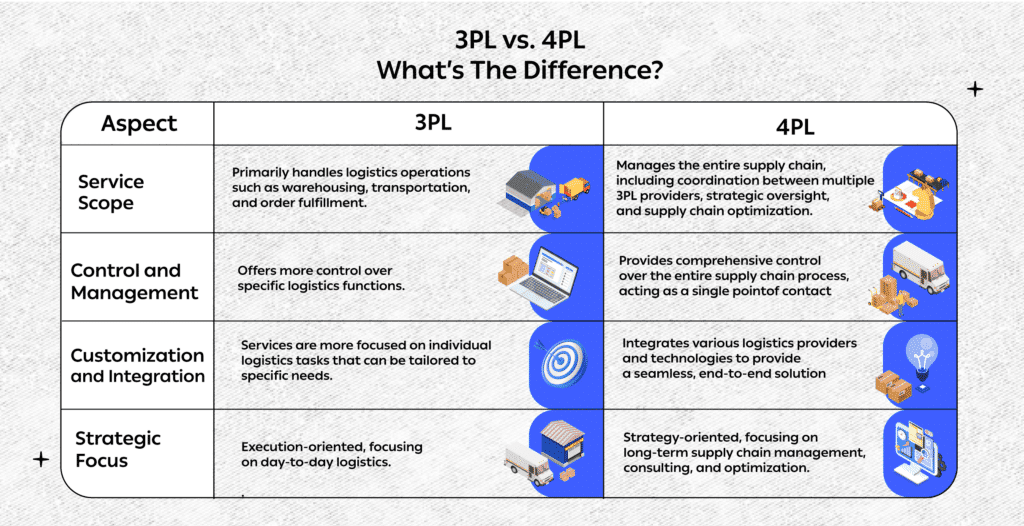
A 3PL provider might be sufficient for smaller businesses with straightforward supply chains. However, by optimizing the logistics network, a 4PL provider could offer a more comprehensive solution for businesses with complex supply chains.
For instance, a large multinational corporation might benefit from a 4PL’s ability to coordinate between various 3PL providers across different regions, ensuring a more cohesive and efficient supply chain strategy.
If your business requires a strategic logistics partner that can align with your long-term goals, OTO is your partner of choice. Connect with one of our experts to discuss your business needs.
Leading 3PL Companies in the UAE
The UAE is home to some of the world's most active 3PL operators, benefiting from Jebel Ali Port, Dubai International Airport, and a network of free zones that attract global logistics companies. Here are the leading providers:
This infographic, by MWR, highlights the top 10 or the best 3PL providers for small business and large businesses as well in the UAE, including major players such as:
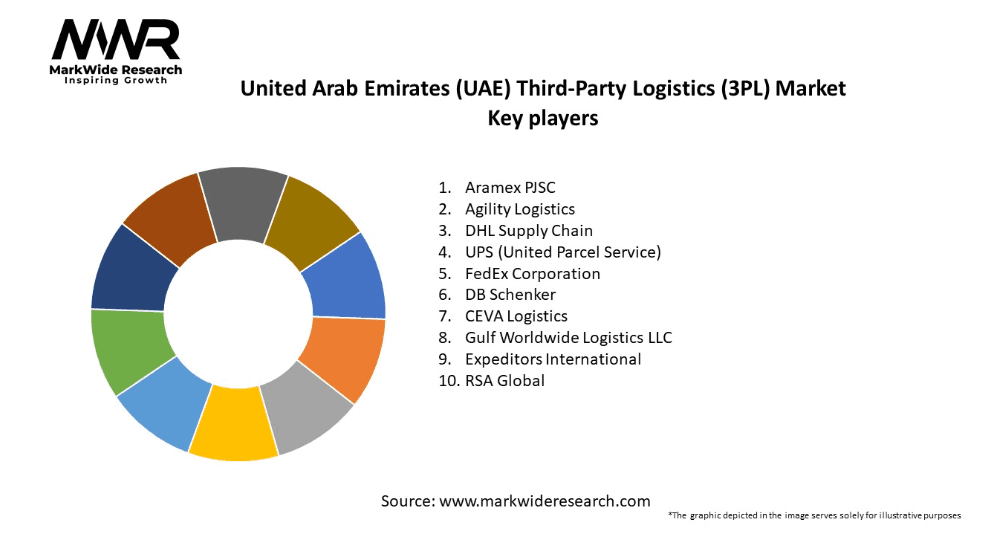
Aramex:
Headquartered in Dubai, Aramex is one of the largest logistics companies in the Arab world. It offers express delivery, freight forwarding, logistics solutions, and e-commerce fulfillment across over 60 countries. Particularly strong for last-mile delivery in the GCC.
DHL Supply Chain:
Part of the Deutsche Post DHL Group, DHL Supply Chain offers warehousing, distribution, and managed transport services across the UAE and wider Middle East. Strong in retail, automotive, and technology sectors.
Agility Logistics:
A Kuwait-headquartered logistics company with a major UAE presence. Agility specializes in freight forwarding, project logistics, and supply chain management for emerging markets.
DP World:
Based in Dubai, DP World operates ports, terminals, logistics parks, and economic zones across 78 countries. Their UAE logistics operations span warehousing, distribution, and end-to-end supply chain solutions.
FedEx:
Offers international express delivery, freight, and supply chain solutions across the UAE. Strong for cross-border e-commerce and time-sensitive shipments.
Kuehne + Nagel:
One of the world's largest logistics companies, with a significant UAE presence. Specializes in sea freight, air freight, contract logistics, and healthcare logistics including cold chain.
Al-Futtaim Logistics:
A UAE-based provider offering warehousing, distribution, and integrated supply chain solutions. Particularly strong in retail and automotive logistics within the Gulf region.
Gulf Agency Company (GAC):
Specializes in shipping, logistics, and marine services. Strong in oil and gas, perishables, and pharmaceutical logistics across the UAE and broader Gulf region.
These companies are pivotal in managing transportation, warehousing, and distribution for various industries across the region. With the UAE emerging as a global trade hub, these 3PL providers offer essential services like freight forwarding, inventory management, and fulfillment solutions to ensure seamless logistics operations.
The presence of renowned international firms alongside local leaders reflects the competitive and dynamic nature of the UAE’s logistics landscape.
The Importance of 3PL
3PL logistics offers a comprehensive solution for businesses seeking to optimize their supply chain operations and drive growth. By outsourcing logistics functions to experienced 3PL companies, businesses can reduce costs, improve efficiency, and focus on their core competencies.
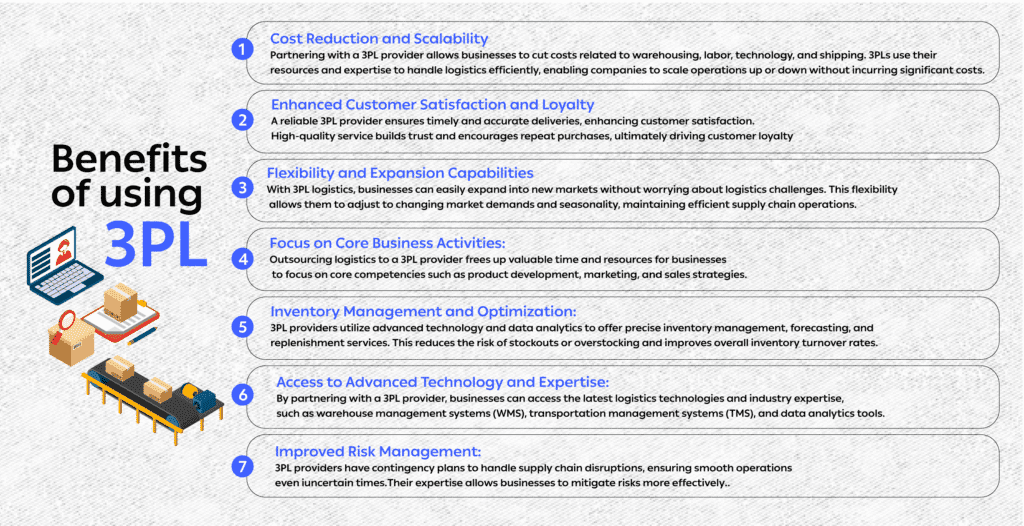
Here are some key advantages of using 3PL:
1. Cost Reduction and Scalability
Partnering with a 3PL provider allows businesses to cut costs related to warehousing, labor, technology, and shipping. 3PLs use their resources and expertise to handle logistics efficiently, enabling companies to scale operations up or down without incurring significant costs.
The UAE logistics market continues to grow strongly, driven by e-commerce expansion, Vision 2030 initiatives in Saudi Arabia, and the UAE's position as a global trade hub. Industry analysts consistently project the GCC 3PL market to maintain a CAGR above 6% through 2030, reflecting the sustained shift toward outsourced logistics solutions across the region.
2. Enhanced Customer Satisfaction and Loyalty
A reliable 3PL provider ensures timely and accurate deliveries, enhancing customer satisfaction. High-quality service builds trust and encourages repeat purchases, ultimately driving customer loyalty.
Some 3PLs also offer value-added services like gift wrapping or personalized packaging, which can further enhance the customer experience.
Curious about how OTO can enhance your customer experience? Sign up for a free demo and explore the all-in-one solution trusted by leading retailers.
3. Flexibility and Expansion Capabilities
With 3PL logistics, businesses can easily expand into new markets without worrying about logistics challenges. This flexibility allows them to adjust to changing market demands and seasonality, maintaining efficient supply chain operations.
For example, an e-commerce company can quickly start shipping to new countries using a 3PL with an international network, without needing to set up its own logistics infrastructure.
4. Focus on Core Business Activities
Outsourcing logistics to a 3PL provider frees up valuable time and resources for businesses to focus on core competencies such as product development, marketing, and sales strategies.
This can be particularly beneficial for startups or small businesses that need to allocate their resources wisely to grow their brand.
5. Inventory Management and Optimization
3PL providers utilize advanced technology and data analytics to offer precise inventory management, forecasting, and replenishment services.
This reduces the risk of stockouts or overstocking and improves overall inventory turnover rates. For example, some 3PLs use predictive analytics to help businesses adjust inventory levels based on anticipated demand, reducing carrying costs and improving cash flow.
6. Access to Advanced Technology and Expertise
By partnering with a 3PL provider, businesses can access the latest logistics technologies and industry expertise, such as warehouse management systems (WMS), transportation management systems (TMS), and data analytics tools.
These technologies can significantly improve supply chain visibility and efficiency, providing businesses with real-time data to make informed decisions.
7. Improved Risk Management
3PL providers have contingency plans to handle supply chain disruptions, ensuring smooth operations even in uncertain times. Their expertise allows businesses to mitigate risks more effectively.
For example, during the COVID-19 pandemic, many 3PLs were able to quickly adapt their operations to new safety protocols and changing market conditions, helping their clients maintain continuity.
Challenges of Using 3PL
While 3PL offers numerous benefits, it’s important to be aware of potential challenges:
Loss of Control:
Outsourcing logistics means handing over control of a significant part of your business operations. This can be a hurdle for companies that prefer to maintain tight control over their logistics processes.
Integration Difficulties:
Integrating your existing systems with a 3PL provider’s technology can be complex and time-consuming. To mitigate this, ensure that your 3PL partner offers seamless integration capabilities and robust IT support.
Dependency on Provider Performance:
Your business’s success will partly depend on the 3PL provider’s performance. Any lapses in service, such as delays or errors in order fulfillment, can directly impact your customer satisfaction and brand reputation.
For businesses in the UAE looking to scale quickly and reduce logistics costs, outsourcing to a 3PL can be the more strategic choice. However, for companies with highly specialized logistics needs or those that prioritize control, in-house logistics might still be preferable.
Deciding between outsourcing logistics to a 3PL provider and managing it in-house can be a tough choice. Here’s a quick comparison to help you decide:
Aspect | In-House Logistics | Third-Party Logistics (3PL) |
|---|---|---|
Control | Full control over logistics operations | Reduced control, relies on the 3PL provider’s processes |
Cost | High upfront costs for warehousing, technology, and staff | Lower upfront costs; pay-as-you-go model |
Scalability | Limited by internal resources | High scalability, easily adjust to market demands |
Expertise | Requires in-house expertise | Access to logistics experts and advanced technologies |
Flexibility | Less flexibility in adapting to sudden changes | Greater flexibility and ability to quickly adapt |
Factors to Consider When Selecting a 3PL Provider
Choosing the right Third-Party Logistics (3PL) provider is crucial for optimizing your supply chain and achieving operational excellence. Here are key factors to consider when making your decision:
Service Offerings and Specialization:
Not all 3PLs offer the same services. Some focus on transportation only, others on warehousing and fulfillment, and some on specialized sectors like healthcare or cold chain. Make sure the provider covers every service you need today and has the capability to support what you will need as you grow.
Geographic Coverage and Network:
If you ship regionally or internationally, your 3PL's coverage map matters. A provider with strong local knowledge in the UAE but limited international reach will struggle when you expand. Verify that their carrier network and warehouse locations align with where your customers are.
Technology and Integration:
Your 3PL's systems need to connect with yours. Ask specifically how they integrate with your e-commerce platform, order management system, and ERP. A 3PL with a modern WMS (Warehouse Management System) and TMS (Transportation Management System) that shares real-time data with you is far more valuable than one that sends manual reports.
Scalability and Flexibility:
Your logistics needs will change. A 3PL that cannot scale with you will force a painful provider switch at the worst possible moment. Ask how they handle volume spikes (peak season, promotional events) and what the process looks like if you need to add a new product category or market.
Financial Stability and Reputation:
Your supply chain runs through this provider. If they face financial difficulties, your operations are at risk. Research their track record, ask for client references, and check how long they have been operating. Established providers with a long client list are generally lower risk.
Customer Service and Communication:
When something goes wrong in logistics, it goes wrong fast. You need a 3PL that responds quickly and communicates clearly. Evaluate their support model before signing: Do you get a dedicated account manager? What are their SLA response times? How do they handle disputes?
Security and Compliance:
Your 3PL will handle your inventory and your customer data. Verify that they comply with UAE customs regulations, maintain appropriate cargo insurance, and have robust data security practices. For regulated industries (healthcare, food, cosmetics), confirm they hold the relevant certifications.
Cost-Effectiveness:
3PL pricing can be complex. Understand every cost component: storage fees, pick and pack fees, outbound shipping rates, returns handling, and any minimum commitment requirements. The cheapest provider is rarely the best choice. Focus on total cost of fulfillment relative to service quality.
🏆Success Story: Explore how one of OTO’s valuable clients overcame their shipping and logistics challenges.
Conclusion
3PL logistics is not just an operational shortcut. For most growing businesses, it is the more intelligent path. You gain access to infrastructure you could not afford to build, technology you could not develop, and expertise that takes years to accumulate, without the capital commitment or management overhead of doing it yourself.
The key is choosing the right partner. A well-matched 3PL provider becomes an extension of your business, one that scales when you scale, adapts when your needs change, and protects your customer experience even when supply chains get complicated.
Whether you are a startup looking to ship your first 100 orders or an enterprise managing cross-border logistics across the GCC, the principles are the same: match the provider to your actual needs, verify their technology, and hold them to clear performance standards.
Ready to optimize your logistics operations? Connect with OTO and discover how our platform connects you to 400-plus shipping companies across the Arab world through a single, intelligent system.
Ready to enhance your logistics operations? Connect with one of our experts today to find the best solution for your business!

Aly Osama