Not all shipping is the same. Land, sea, and air cover three different modes of transport. Standard, express, and same-day cover three different speeds. Cold chain, heavy freight, and food delivery cover three different product requirements. Each type exists because a different business problem demands a different solution.
For any business that ships products, whether you run an e-commerce store, a retail operation, or a manufacturing company, choosing the right shipping type directly affects your costs, your delivery speed, and your customer experience.
This guide breaks down all the main shipping types across five categories: by mode of transport, by delivery range, by speed, by product type, and by resource model. By the end, you will know which shipping type fits your business, your products, and your customers.
Shipping types by mode of transport
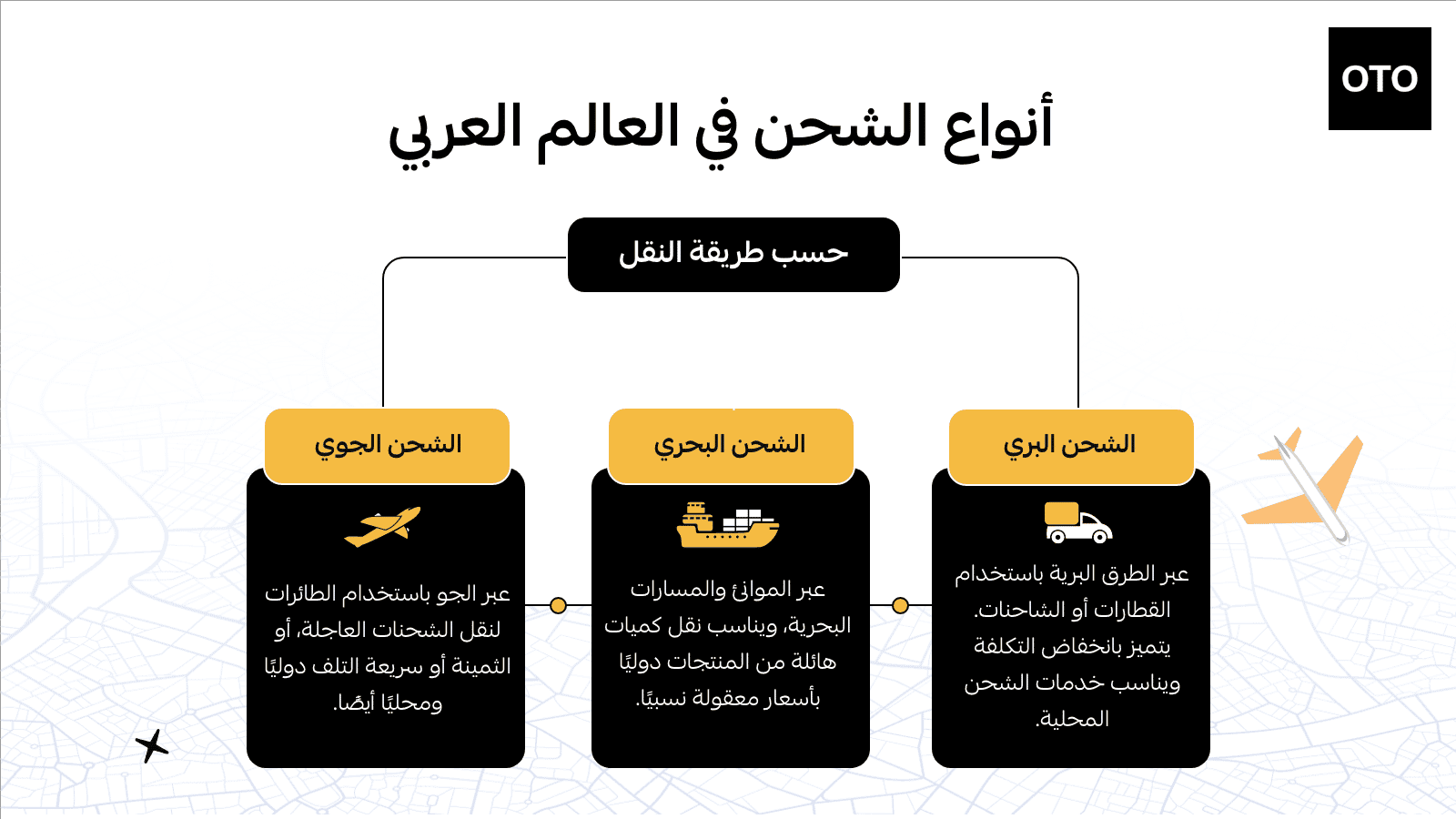
It includes three main types:
Land Shipping
It means transporting goods from one point to another via various land routes using available means of transport such as trucks and trains. Land shipping is considered one of the traditional types of shipping for transporting goods.
For businesses in the Arab World, rail shipping is most relevant for regional bulk cargo movements, particularly in Saudi Arabia, where the Haramain High Speed Railway and the Saudi Landbridge project are expanding rail freight capacity between the Red Sea and Arabian Gulf coasts.'
Land shipping is divided into two types:
1. Shipping using trucks:
It is the most common type of land shipping, where goods are transported from one point to another via land roads using trucks of different sizes and weights, which provides the necessary flexibility in terms of shipment sizes, transport distances, and schedule. Goods are shipped using trucks through the implementation of two main strategies:
Less Than Truckload (LTL): This is a strategy designed for shipments that do not require the entire truck capacity to be used, so that the requests of multiple shipping companies can be combined in one truck, with each occupying a portion of the available space. It is an ideal option for businesses that have smaller quantities of orders to transport and do not wish to bear the cost of the entire truck.
Full Truckload (FTL): This is a strategy designed for larger shipments that require the full capacity of the truck, which benefits large businesses that have large quantities of orders or those with items that need special care or handling.
2. Shipping via railways:
It is an effective and main means of transporting shipments over long distances, characterized by high efficiency due to the trains' ability to transport large quantities of orders at once, making it a cost-effective means of transport for long distances, as well as reliability and accuracy in delivery.
In addition, rail transport gives various businesses great diversity for shipping different items, including bulk and packaged goods, containers, and hazardous materials.
Generally, rail shipping is a sustainable and effective option for transporting goods over long distances, and with continued technological developments and infrastructure improvements, rail shipping is expected to play a larger role in global supply chains in the future.
Uses of land shipping:
Transporting goods between cities and neighboring countries.
Delivering raw materials to factories.
Distributing products to stores.
Last Mile Delivery to customers, where it is relied upon to deliver online purchase orders to the customer's door.
Advantages of land shipping:
Lower cost compared to other shipping types such as air freight, especially when transporting large quantities of goods over long distances.
Ease of transport due to the presence of a wide network of land roads extending throughout most countries, meaning that land shipping provides easy access to remote areas, cities, and nearby warehouses.
Ability to transport heavy and large goods via trucks and trains, making land shipping a suitable option for industries that require transporting large or heavy equipment.
Disadvantages of land shipping:
Limited delivery speed compared to air freight, as shipping goods over long distances using trucks or trains requires a long time, making it an unsuitable option for time-sensitive goods.
Restrictions on the geographical distance that can be covered, making it an unsuitable option for international shipping.
Environmental impact through carbon dioxide emissions that cause air pollution, especially when transporting goods over long distances.
Sea Shipping
It refers to transporting various shipments inside containers loaded onto ships across the sea. Sea shipping is considered one of the most important means of transporting goods globally, connecting different continents and regions through a vast network of ports and sea routes. It also plays a vital role in supporting global trade, as it allows for the transportation of enormous quantities of goods at relatively affordable prices compared to other types of shipping.
Given its ability to transport various types of shipments, from raw materials to manufactured goods, sea freight handles approximately 90% of world trade by volume, making it the backbone of global commerce.
For Arab World businesses importing or exporting large volumes of goods, sea shipping is almost always the most cost-effective mode of transport..
Types of sea shipping:
Common types of sea shipping include:
Container Shipping: In this type, goods are loaded inside specific standard containers and then loaded onto ships. This type of sea shipping is commonly used for large and heavy shipments.
Liquid Bulk Shipping: Used to transport liquids such as oil, gas, and chemical products, relying either on special tanks aboard the ship or loading the liquid directly into designated containers.
Dry Bulk Shipping: In this type, dry materials such as grains, coal, and raw minerals are transported without packaging them in containers, where they are loaded directly in large parts onto the ship.
Refrigerated Shipping: Used to transport goods that require low temperatures, such as fresh food products, via special refrigerated containers to maintain the appropriate temperature during transport.
Uses of sea shipping:
Transporting large and huge quantities of goods between countries and continents, as it is the primary means for international trade.
Shipping containers and general cargo, as it is relied upon to transport containers that contain various types of products such as clothing, appliances, and spare parts.
Transporting heavy and bulky goods, including industrial equipment, cars, and large machines that are difficult to transport by other means.
Shipping liquid materials and gases such as oil, natural gas, and liquid chemicals.
Transporting raw materials and basic commodities, such as coal, iron, grains, and sugar from one country to another to meet market needs.
Advantages of sea shipping
Large cargo capacity of ships which enables them to transport huge quantities of goods of various types, making sea shipping a preferred option for commercial activities that need to transport large quantities of goods.
Low cost, as it is one of the cheapest types of shipping in the long run compared to air transport or land shipping.
Achieving environmental sustainability principles compared to other means of transport such as air freight, due to ships consuming less fuel.
Disadvantages of sea shipping
Takes a long time to ship goods compared to air or land freight due to ship schedule requirements and port stops.
Complexity of documentation and customs procedures due to their large number, in addition to adherence to established international regulations.
Restrictions on destinations that can be reached, as some ports may not be able to receive large ships, requiring the use of additional means of transport to move goods from major ports to the final destination.
The possibility of marine vessels being exposed to environmental impacts such as sea storms and marine pollution. Although environmental safety standards in the maritime shipping industry have improved, these risks still exist.
Air Shipping
The term air shipping refers to the transport and delivery of goods and commodities from one point to another via air using aircraft. This shipping method is usually relied upon for high-priority shipments, time-sensitive shipments, or valuable shipments. The items that can be shipped by air vary to include, for example:
Consumer goods including electronic products, household appliances, clothing, accessories, and fresh food products such as fruits and vegetables.
Medical supplies including medical devices, tools, materials, medicines, and vaccines.
Industrial parts such as machinery, equipment, and large electronic components used in factories.
Industrial chemicals such as raw materials used in the manufacture of various products such as medicines, agricultural fertilizers, and cosmetics.
The duration of product shipping by air varies depending on the distance, the type of aircraft, and weather and customs factors. Generally, products can be delivered internally to their destination within a few hours, while on international flights, product shipping may take a longer period, up to a maximum of 3 days. This is determined based on your needs and requirements from the selected air shipping companies.
Types of air shipping:
Air shipping types are classified based on delivery speed and shipping cost into three main types:
Express air shipping: This is the fastest way to transport goods, where they are shipped on passenger flights or dedicated cargo planes. This type of air shipping is ideal for perishable goods, important documents, medical samples, and high-value goods, and it is also the most expensive in terms of cost due to the speed of delivery and the services provided.
Economical air shipping: This is less expensive than express air shipping and slower, but faster than sea shipping, and is ideal for non-perishable goods and large shipments.
Emergency air shipping: This is a very fast option, used in emergencies or when speed is essential for delivering shipments. It is ideal for medical emergencies, transporting vital organs, and transporting sensitive equipment. It is the most expensive type of air shipping ever, as goods are shipped on chartered planes.
Uses of air shipping:
Transporting shipments that require quick delivery such as documents, medicines, and urgent parcels.
Shipping high-value goods, as it is ideal for transporting valuable products such as gold, electronics, and luxury watches due to high security.
Transporting medicines and medical supplies, as it is relied upon to transport sensitive medicines or those that require specific temperatures within a short time.
Supporting emergency and relief efforts and quickly delivering humanitarian aid to disaster-stricken or affected areas.
Advantages of air shipping
Delivery speed: Speed is one of the biggest advantages of air shipping, as goods can be transported very quickly from one place to another, which enhances the ability to meet urgent market needs.
Flexible schedule: Air freight trips can be arranged easily and quickly, allowing urgent requests to be met and the schedule to be quickly changed in case there is an urgent need to transport shipments.
Global reach: Air shipping has the ability to reach almost any destination around the world, facilitating the exchange of goods and promoting international trade.
Access to remote areas: Air shipping can easily reach remote and isolated areas, where small and uninhabited airports can be used to facilitate the delivery process.
Disadvantages of air shipping
High shipping cost compared to other types of shipping, which affects profit margins.
Restrictions on the size and weight of shipments as well as the quality of products that can be transported by aircraft, meaning that in some cases, it may be difficult to transport bulky or heavy goods via air shipping.
Higher environmental impacts compared to land and sea transport due to carbon emissions.
Shipping types by delivery range
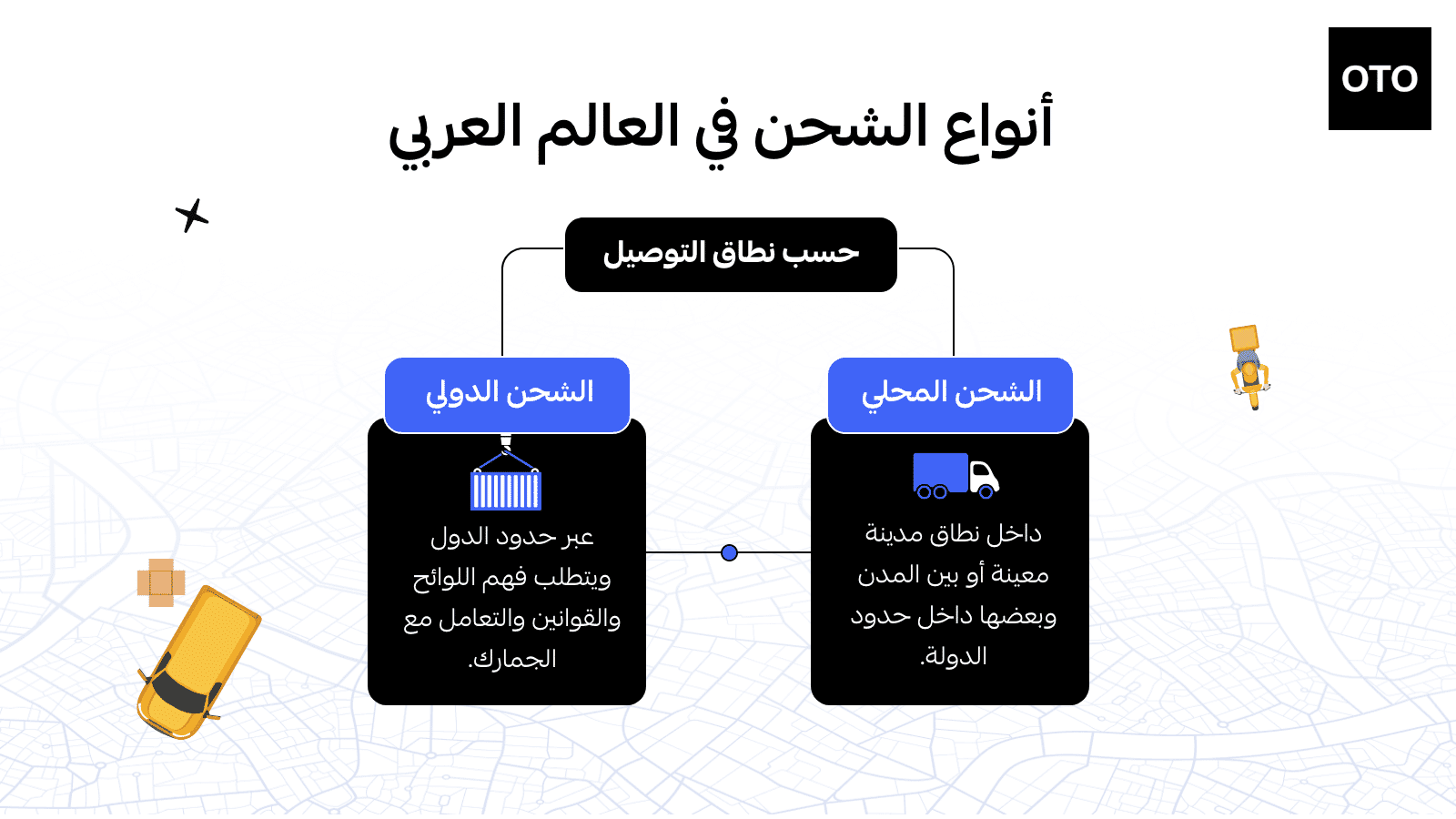
International Shipping
It is a shipping option that aims to ship products and pass them across national borders to deliver them at specified times, and it usually takes longer than domestic shipping due to customs clearance and the long distance covered.
International shipping requires understanding the regulations and costs associated with different countries, and dealing with customs professionally to avoid delaying the arrival of customer orders and missing specified delivery dates. We note that choosing the right international transport company depends on many factors such as: destination, cost, speed, and reliability, and among the most famous international shipping companies are DHL, FedEX, and UPS.
For businesses in the Arab World, international shipping typically involves one of three modes: air freight for high-value or time-sensitive goods, sea freight for large volumes at lower cost, and road freight for cross-GCC or cross-Middle East shipments. Key considerations include: customs documentation, import duties, restricted goods lists per destination country, and whether the shipping carrier offers end-to-end tracking across borders.
Domestic Shipping
It refers to delivery operations that take place within the country's borders, whether within a specific city such as Riyadh, for example, or between cities within the country's borders, such as shipping from Riyadh to Jeddah.
This type of shipping is important for e-commerce companies, retail stores, and other institutions that require fast and reliable delivery services within local markets.
The means of transport used in domestic shipping vary to include trucks, trains, inland vessels, and small planes, and the choice of the appropriate means of transport is due to several factors, including the size of orders, the distance covered, and the specified delivery time. It is worth noting that trucks are the most used means in domestic shipping because of their ability to reach multiple areas, especially remote ones.
In Saudi Arabia and the UAE, domestic shipping networks are well developed, with carriers offering next-day or same-day delivery within major cities and 2 to 3 day coverage to more remote regions. For GCC merchants, domestic shipping is usually managed through a logistics platform that connects to multiple local courier services under one integration.
Shipping types based on the nature of the products
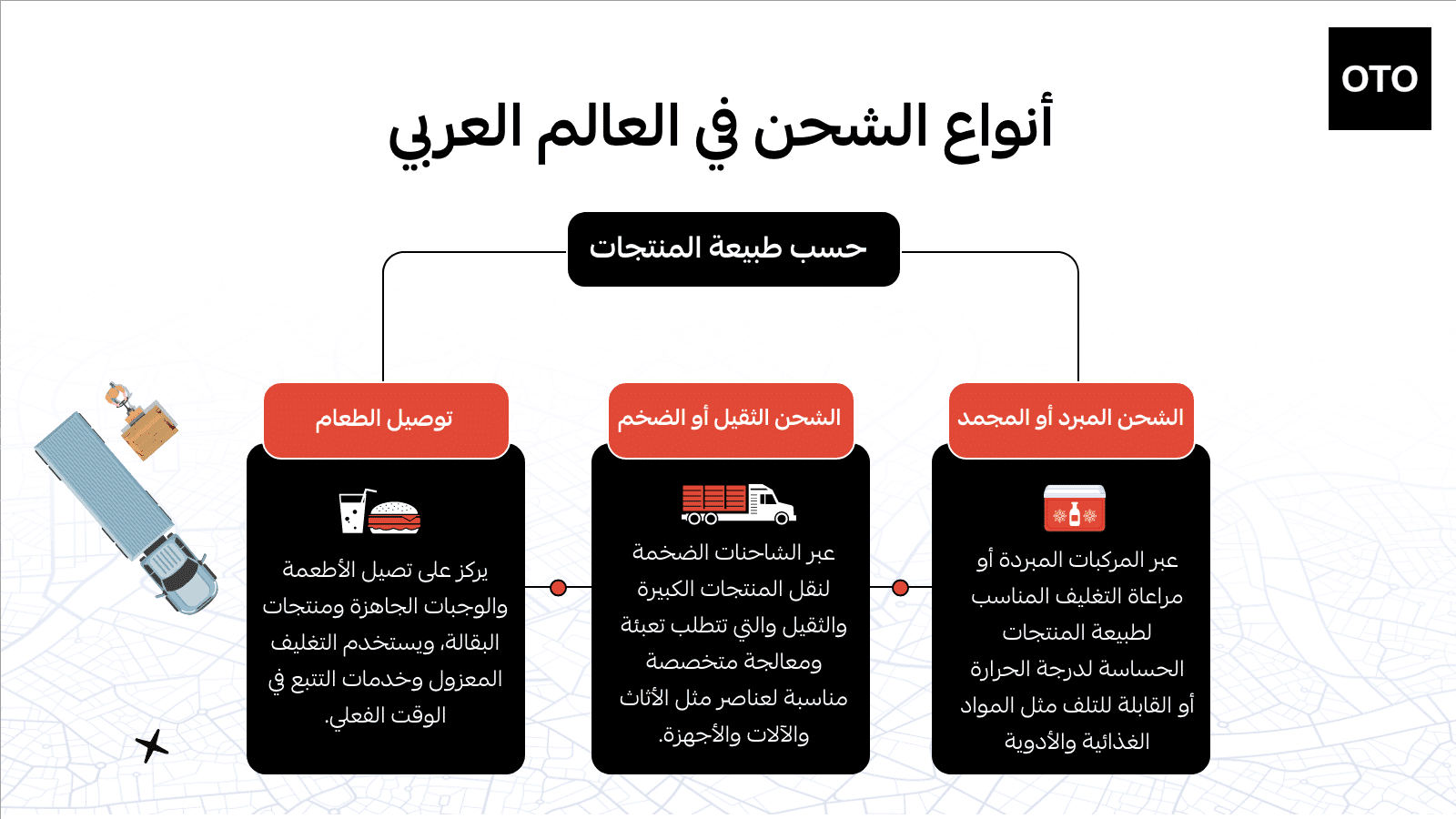
Refrigerated or frozen shipping
Refrigerated or frozen shipping is a vital part of the logistical infrastructure that supports the transport and distribution sector for fresh food products and temperature-sensitive products in the Kingdom of Saudi Arabia.
The increasing population of urban areas and changing consumer behavior have led to an increase in demand for refrigerated storage and transport, which is explained by this statistic which stated that the size of the logistics and cold chain market in Saudi Arabia is estimated at about $1.51 billion in 2024, and is expected to reach $2.60 billion by 2029, with a compound annual growth rate of 11.39% during the forecast period.
The main goal of this type of shipping is to maintain appropriate temperatures during the transport and distribution process to ensure the quality and safety of temperature-sensitive and perishable products such as food, medicines, and some chemicals. Merchants must ensure reliance on shipping companies equipped with refrigerated vehicles or containers to maintain the safety of products during transport and deliver them in the best possible quality to consumers.
We note that this type requires higher costs due to the equipment used and the special handling required, and timely delivery and adherence to strict temperature regulations are vital matters to consider to prevent damage and maintain product quality. Among the most prominent shipping companies specialized in refrigerated transport are Jonex, Delix, Adwar, and Road Logistics.
Heavy or bulky shipping
It is one of the types of shipping designed specifically for transporting large and heavy items such as furniture, machinery, and huge equipment. Heavy shipping requires careful arrangements and meticulous planning to ensure the safe delivery of shipments to their destination, which necessitates merchants considering specialized packaging, handling, and transport methods to ensure the safe delivery of these items.
Heavy shipping usually involves higher costs and longer delivery times due to the complexity of transporting heavy shipments, which requires coordination with shipping companies that possess the necessary equipment and experience to handle these shipments, such as Flow PL, GLT Express, and Zajil, among others.
Food delivery
Food delivery is one of the modern services that has gained wide popularity in recent years, especially with the spread of smartphone applications and specialized companies such as Tookan, which have facilitated the ordering and delivery process.
Food delivery focuses on transporting ready-to-eat meals, groceries, and other food products directly to consumers, which necessitates reliance on insulated packaging and real-time tracking to monitor delivery progress. Maintaining food safety standards and meeting customer expectations for fast service are crucial for the success of food delivery operations. Therefore, merchants must prioritize speed, efficiency, and quality to ensure food arrives fresh and safe for consumption.
Shipping types by delivery duration
Standard shipping
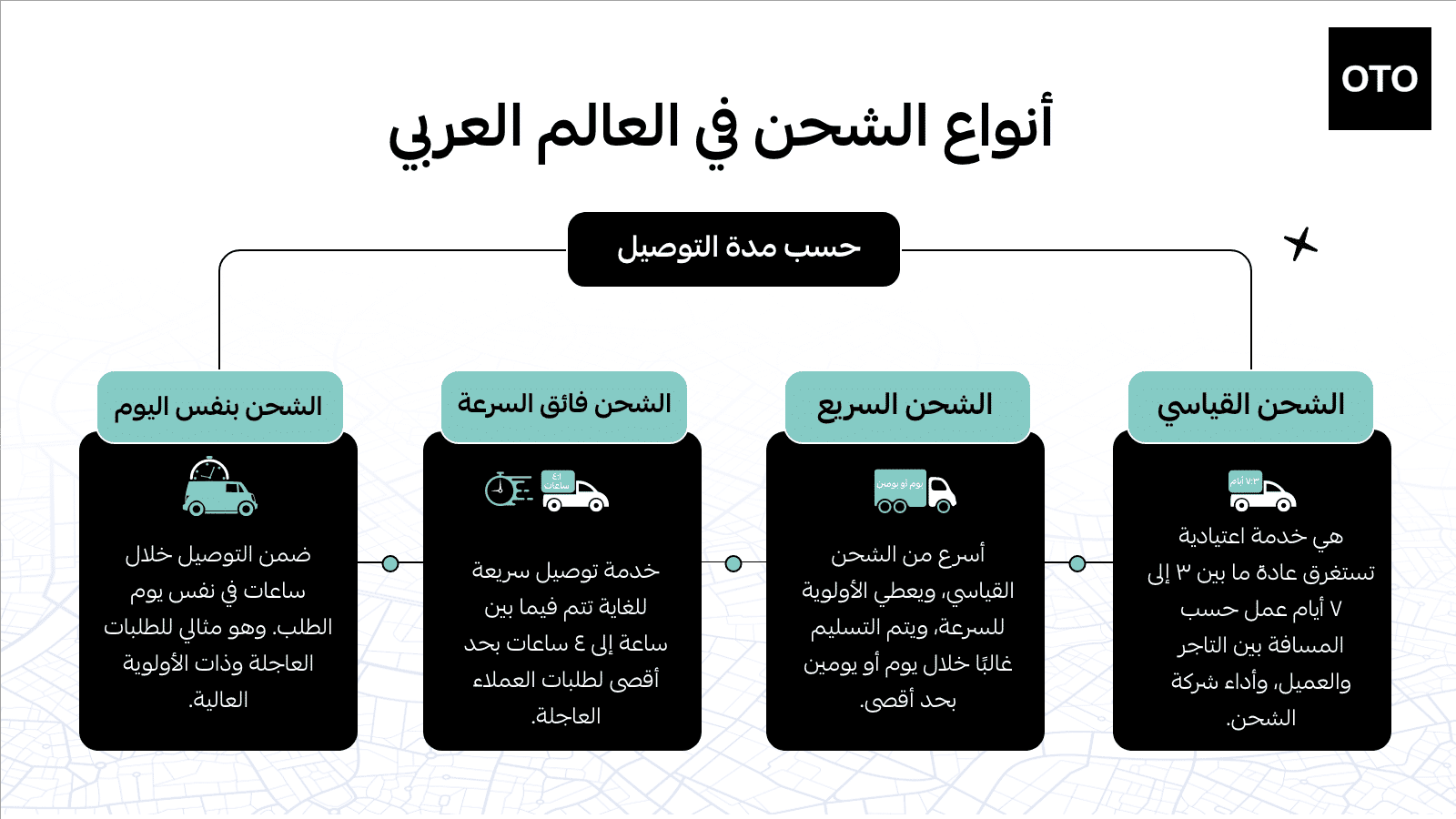
It is a regular shipping service that usually takes between 3 to 7 working days, depending on the distance between the merchant and the customer and the performance and method of operation of the shipping company. This type is ideal for orders that do not require fast delivery, such as non-perishable goods like clothing and household items.
Standard shipping is characterized by its low cost compared to other delivery options, which benefits both the merchant and the customer, but it is slower in terms of delivery speed.
Express shipping
It is another shipping service that aims to deliver goods faster compared to standard shipping, where orders usually reach consumers within 1 to 3 working days.
Express shipping is higher in cost because it is prioritized by the shipping company and receives special attention, in addition to requiring fast transport methods to ensure orders are delivered in the shortest possible time and to gain customer satisfaction. It is an ideal option for goods that need fast delivery to customers such as urgent documents, medical supplies, or perishable goods.
On-Demand Delivery
It is an innovative and unique type of shipping that aims to reduce delivery time to the least possible time, as orders are delivered to consumers within 1 to 4 hours as a maximum delivery time. This innovative type relies on a wide network of warehouses in different geographical points close to consumers, which allows for fast and highly efficient order delivery.
This is in addition to relying on advanced technologies such as advanced order management systems, and the use of artificial intelligence to improve the delivery process by predicting demand and determining optimal delivery routes, which leads to providing a distinguished shipping experience for customers that enhances their loyalty to the brand.
Bullet Delivery is beneficial for shipping medical products such as vital medicines and vaccines, fresh food, and luxury products such as precious jewelry, etc. Among the most prominent shipping companies that offer this type are Sabel, Deliverast, Sa'ee, and Careem.
Same-day delivery
Same-day delivery aims to deliver orders within hours of the order being completed, up to a maximum of 24 hours. This type of express shipping service requires high efficiency in logistics services, including inventory management and monitoring, effective execution of operational processes within warehouses, and the presence of delivery points close to consumers.
This type has higher operating costs due to the need for fast processing and delivery of orders, and is ideal for local businesses, groceries, or urgently needed goods. Among the most important companies providing this service are Najiz, Aramex, Naqel Express, and Ay Makan.
Shipping types by available resources
Shipping with external companies
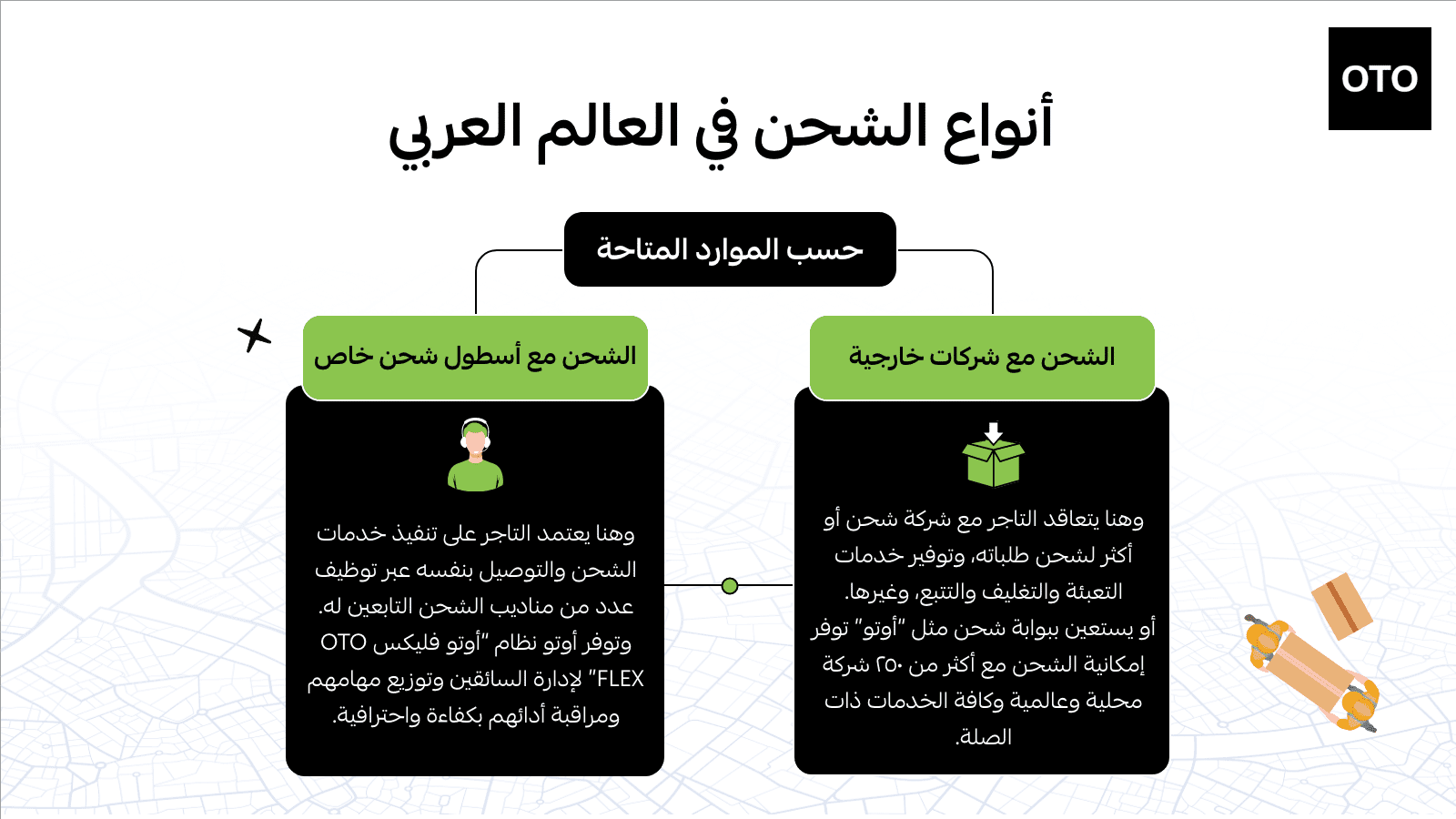
It is a type of shipping suitable for commercial activities that do not have the necessary resources to establish their own transport fleet and therefore use external shipping companies to ship orders and deliver them to consumers in the best quality and at specified times.
Contracting with a shipping company requires considering a number of important matters such as experience, good reputation, reliability, quality of services provided, and appropriate costs to ensure the achievement of desired goals and enhance the competitive value of your commercial activity.
Shipping with a private shipping fleet
This type of shipping is suitable for commercial activities that possess the necessary resources to form a transport fleet to rely on for delivering products to consumers. This innovative approach offers many benefits to brands, including:
Cost reduction:
The reliance of commercial activities on their private transport fleet contributes to avoiding the high shipping fees imposed by shipping companies, in addition to improving the efficiency of their shipping and delivery operations, which leads to gaining customer satisfaction and enhancing their loyalty.
Full control:
Companies have the ability to fully control the shipping process and ensure that products are delivered on time and safely, in addition to customizing shipping services to meet the needs of their customers.
Flexibility:
Commercial activities that possess the resources that enable them to establish their private shipping fleet have enough flexibility to quickly respond to shipping requirements to meet changing customer needs. They can also expand the delivery range to new areas easily without the need to search for and contract with shipping companies to cover these areas.
We note that the matter does not end with merely possessing the resources that enable you to establish a private transport fleet for your commercial activity; rather, it requires searching for an integrated system that enables you to manage it efficiently and effectively. The OTO FLEX application is an advanced system that allows you to manage your own fleet of drivers and fully control all shipping operations, providing a comprehensive view of the drivers' work routes, itineraries, and order flow.
This application allows you to:
Utilize your resources and establish your own transport fleet as if you own a shipping company dedicated to you with absolute control over it.
Distribute tasks to drivers according to customized rules you set yourself, whether based on the driver with the least number of orders, the driver responsible for a specific branch, warehouse, or area, or the driver closest to the order pickup location.
Track and monitor the drivers' route and the movement of orders moment by moment and know their locations on the map until they are delivered to consumers or returned to the merchant.
Obtain abbreviated or detailed analysis and reports on drivers to compare achievement and productivity levels and adherence to the service level agreement, and know the average delivery time (in minutes), and the value of cash on delivery amounts collected.
Send alerts and notifications to customers to inform them of the arrival time of their orders, and enable them to communicate with the driver.
After talking about the basic types of shipping and giving a quick overview of each type, the important question comes:
How to choose the best type of shipping for your business?
Many factors control the choice of product shipping method through the available shipping types, whether land, sea, or air, and here are some of them:
Cost:
It is one of the influential factors in making the final decision about the most appropriate shipping method, as the cost varies from one type to another. Air freight, for example, is often more expensive than land or sea freight, especially when it comes to shipping large quantities of products. Therefore, shipping by land or sea may be the most economical option if speed is not an urgent requirement for delivering goods.
Distance and route:
The choice of shipping method also depends on the distance the shipment must travel, and the available routes. Land shipping, for example, may be more suitable for domestic shipments within the country, while sea or air shipping is appropriate for international shipments.
Product quality:
It is also a crucial factor in choosing the appropriate method for shipping goods, as some products require special care or are sensitive to environmental conditions such as high temperatures or humidity. In these cases, air freight may be the best to ensure that products arrive in good condition and in a short time.
Time:
It is also one of the essential factors that affect the decision to choose the most appropriate type of shipping to transport goods. If there is a need to deliver products quickly, air freight is the best option, as delivery is done within a few days. While shipping by land or sea can take a longer time, especially when products are destined for long distances.
These are some of the key factors that control your choice of the appropriate shipping method from the available shipping methods and types to ensure products are delivered in the shortest time and best quality.
Weight and Dimensions:
Shipping costs are calculated based on actual weight or dimensional weight (whichever is greater). Heavy or bulky shipments may be better suited to road or sea freight. For lightweight, high-value items, air freight's cost-per-kilo is more justifiable. Always calculate dimensional weight before selecting a shipping type to avoid unexpected costs.
Customs and Regulatory Requirements:
For international shipments, the destination country's import rules directly affect your shipping type choice. Some modes of transport have simpler customs procedures. Air freight documentation is well-standardized globally. Sea freight requires more complex documentation. Certain product categories (food, medicine, electronics) may require specific certifications regardless of the shipping mode.
Carrier Reliability and Coverage:
The best shipping type in theory is only as good as the carrier executing it. Assess the carrier's track record for on-time delivery in your specific routes, their network coverage in destination regions, and their claims and dispute resolution process.
Packaging and Handling Requirements:
Some products require special packaging or handling that is only compatible with certain shipping types. Temperature-controlled containers for cold chain. Reinforced crating for heavy machinery. Secure tamper-evident packaging for high-value goods. Your packaging requirements may narrow your shipping type options significantly.
Customer Delivery Expectations:
Ultimately, the right shipping type is the one that meets your customers' expectations at a cost your business can sustain. If your customers expect next-day delivery, standard shipping is not an option, regardless of its lower cost. Use customer feedback, cart abandonment data, and return reasons to understand what delivery speed and reliability your specific audience actually requires.
In conclusion
Understanding shipping types is not just theoretical knowledge. Every decision you make about how to ship your products directly affects your operating costs, your delivery reliability, and how your customers experience your brand.
Most businesses do not use just one shipping type. A growing e-commerce operation might use standard domestic delivery for most orders, same-day delivery for high-priority customers in major cities, cold chain shipping for perishable products, and international air freight for export orders. The best approach is to match the shipping type to the specific need rather than standardizing everything through a single method.
The most practical way to manage multiple shipping types without the complexity of managing multiple carrier contracts is through a logistics platform like OTO, which connects you to 400 plus courier and shipping companies across the Arab World through a single integration, so you can route each order to the right carrier and the right shipping type automatically.

إيهاب محمود