Flat-rate shipping sounds like a wonderful idea, especially if you’re a small business owner. I am, and let me tell you that I have certainly benefited from shipping companies that offer this option.
But is this option suitable for all kinds of businesses?
Flat-rate shipping promises to simplify business logistics by offering standardized costs, eliminating the need for variable rate calculations, and streamlining operations. It enhances the customer experience with consistent shipping fees, reducing cart abandonment, and easing strategic planning for expanding markets.
This is bound to reduce administrative work by minimizing the complexity of managing different shipping rates for various weights and destinations, making it ideal for scaling operations.
In this article, we will explore flat-rate shipping, its benefits and downsides, and whether it is the best solution for businesses in the MENA region.
Flat Rate Shipping Explained
Flat-rate shipping is a method in which the shipping cost is predetermined based on package size or weight class rather than the distance or weight of the delivery.
The main difference between flat-rate shipping and standard shipping lies in how the shipping cost is calculated.
With flat-rate shipping, the price remains fixed regardless of the package’s weight, size, or distance, as long as it fits within specified dimensions or weight limits.
In contrast, standard shipping calculates the cost based on variables like the package’s weight, size, and delivery distance, resulting in fluctuating rates.
Types of Flat Rate Shipping
Standard flat-rate shipping is used for smaller packages, with fixed prices based on size and weight limits, no matter the distance.
Flat-rate freight shipping handles larger bulk shipments, often on pallets, with fixed prices based on factors like freight class instead of package size. Freight shipping is best for heavy, large goods, making it ideal for bulk shipments.
Flat-rate shipping makes managing multiple orders far more efficient for businesses by providing a consistent shipping cost. This not only simplifies the pricing process but also eliminates the need to calculate individual shipping rates for each order, freeing up valuable time and resources.
With fixed rates, businesses can streamline their shipping operations, automate processes, and easily handle larger volumes. Flat-rate shipping also enhances the customer experience by offering upfront, transparent, straightforward shipping costs, making it an intelligent choice for companies looking to scale or manage growing order volumes efficiently.
The main question we need to answer now is when businesses should opt for flat-rate shipping vs. standard shipping.
As a business, use flat-rate shipping if:
You regularly ship packages that are similar in size and weight.
You want to simplify logistics with predictable shipping costs.
You want to provide a consistent customer experience.
You sell items that fit within flat-rate shipping limits, like clothing, electronics, or beauty products.
On the other hand, standard shipping is better for businesses that deal with a wide range of product sizes, weights, or destinations.
Major Advantages of Flat Rate Shipping
As a small business owner, I know firsthand the challenges of managing shipping costs while trying to provide an exceptional customer experience. That’s where flat-rate shipping comes in as a game-changer. Here are some compelling advantages that have made a significant difference for my business:
Predictable Shipping Costs
Flat-rate shipping eliminates the uncertainty that often plagues traditional shipping methods. With a set shipping price, you can easily budget and forecast expenses, which is crucial for any small business. This predictability means you can focus on growth without worrying about fluctuating shipping rates eating into profits.
Ease of Implementation
Integrating flat-rate shipping into your logistics process can be easy. You can set a flat rate yourself or offer free shipping and incorporate it into the product’s pricing, or you can negotiate a deal with any major shipping company to give you a flat rate.
Faster Checkout Experience
One of the most noticeable benefits is the impact on your customers’ checkout experience. With flat-rate shipping, there’s no confusion about shipping costs at the end of the purchase. This clarity leads to higher conversion rates and ultimately better customer satisfaction. Happy customers are more likely to return and recommend your business, creating a win-win situation.
Reduced Cart Abandonment
One of the most tangible commercial benefits of flat rate shipping is its impact on checkout conversion. When customers see a fixed, predictable shipping cost upfront, they are less likely to abandon their cart at checkout due to 'shipping cost shock.'
Variable shipping rates that only appear at the final checkout step are a well-documented driver of cart abandonment. Flat rate shipping moves the cost expectation earlier in the buying journey, reducing this friction significantly.
Simplified Cross-Border Shipping in MENA
For merchants in Saudi Arabia and the UAE shipping across GCC borders, variable rate calculations across different country zones can be complex and expensive to manage. Flat rate shipping for cross-border GCC shipments removes this complexity by providing a single predictable cost for the entire region, making it easier to price products consistently across your KSA, UAE, Kuwait, and Bahrain customer bases without maintaining different shipping price tables per country.
The Downsides of Flat-Rate Shipping for Small Businesses
While flat-rate shipping offers several advantages, it’s important to consider its potential downsides as well. You may encounter any of these challenges that come with this shipping model:
📦 Limited Flexibility
One of the main drawbacks of flat-rate shipping is its lack of flexibility. This option may not always be the most cost-effective for lightweight packages, and traditional shipping methods sometimes offer better rates for smaller items. This inflexibility can impact your bottom line if you’re not careful about which products you ship using flat-rate options.
📏 Not Suitable for All Product Types
Flat-rate shipping works best when products are similar in size and weight. However, for businesses with a diverse range of product sizes—think bulky items versus small accessories—this approach can be limiting. It might not accurately reflect the actual shipping costs for heavier or more oversized items, which could lead to losses if not managed properly.
💰 Hidden Costs
While flat-rate shipping seems straightforward, hidden costs can lurk beneath the surface. If you’re not using shipping management software, additional charges like packaging, insurance, and delivery surcharges imposed by some couriers can catch you off guard. It’s crucial to read the fine print and understand all the potential expenses involved, or else you risk unexpected costs that could disturb your profits.
💡 Did you know?
With OTO’s shipping gateway, you can avoid contracts and access pre-negotiated rates with all major carriers in your city—completely transparent with no hidden costs! Browse your options and select the rate that fits your needs. Compare rates here.
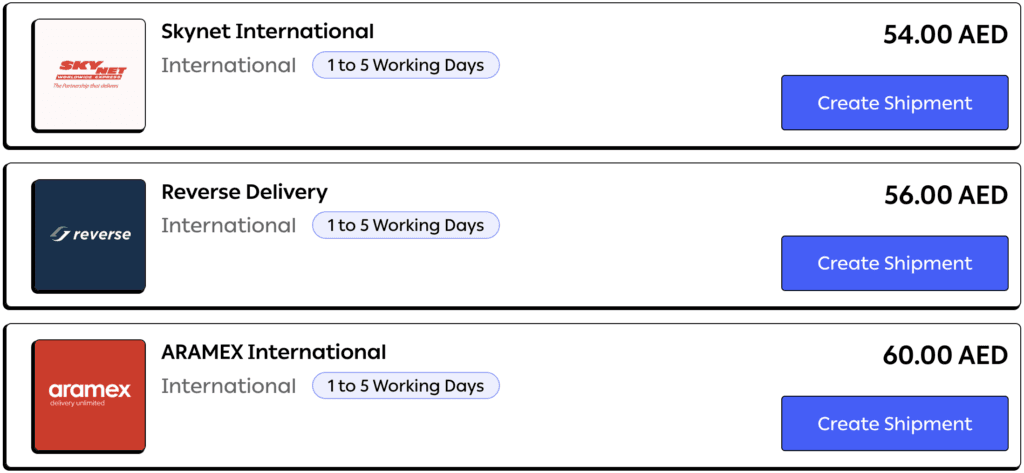
Shipping Rates Example: Small Package from Sharjah to Riyadh
How to Calculate Whether Flat Rate Shipping Saves You Money
Flat rate shipping is only a smart choice if the numbers work. Here is a simple framework to find your break-even point — the shipment profile where flat rate becomes more cost-effective than variable rates.
Step 1: Calculate your average variable shipping cost
Take the last 30 to 90 days of shipping invoices. Add up the total shipping spend and divide by the number of shipments dispatched. This gives your current average cost per shipment.
Example: SAR 3,200 total shipping cost / 160 shipments = SAR 20 average cost per shipment.
Step 2: Identify your product weight and size distribution
Sort your orders into three categories: Light (under 2 kg), Standard (2 to 10 kg), and Heavy (over 10 kg). Calculate what percentage of your orders fall into each category. Most MENA e-commerce merchants find that 60 to 70% of their orders are in the Standard range.
Step 3: Get carrier flat rate quotes for your main route
Contact your carrier or use OTO's price calculator to get flat rate quotes for your most common shipment route (e.g. Riyadh to Jeddah or Dubai to Abu Dhabi) at the Standard weight class. Compare this to your current average variable cost per shipment.
Step 4: Run the break-even comparison
Scenario | Variable Rate | Flat Rate |
Light package (0.5 kg, Riyadh to Jeddah) | SAR 14 to 18 | SAR 22 (flat rate) → Variable wins |
Standard package (5 kg, Riyadh to Jeddah) | SAR 22 to 30 | SAR 22 (flat rate) → Break even |
Heavy package (15 kg, Riyadh to Jeddah) | SAR 40 to 55 | SAR 22 (flat rate) → Flat rate wins |
Mixed order (10 kg + insurance + COD) | SAR 35 to 45 | SAR 22 (flat rate) → Flat rate wins significantly |
The table above uses illustrative figures. Run this comparison with your actual shipping data and current carrier rates. As a rule: if more than 60% of your shipments are at the weight and distance where flat rate is cheaper, it is worth switching. If less than 40% are, stick with variable rates or negotiate a tiered rate with your carrier.
How to Price Flat Rate Shipping into Your Product Pricing
Many MENA merchants choose to absorb their flat rate shipping cost into the product price rather than charging it separately at checkout. This is one of the most effective strategies for reducing cart abandonment because customers see 'free shipping' rather than a fixed fee. Here is how to do it without eroding your margin:
Know your flat rate shipping cost per order first
Before you can absorb it, you need to know exactly what it costs. If your flat rate is SAR 22 per domestic shipment and you are shipping 200 orders per month, your shipping cost is SAR 4,400 per month. This is the amount you need to cover through product pricing.
Add it to your base product price using a weighted average
If your average order value is SAR 150 and your average flat rate shipping cost is SAR 22, shipping represents 14.7% of AOV. Increase your product prices by this percentage to cover the cost. For a product currently priced at SAR 100, the new price would be SAR 115.
Test price sensitivity before committing
Not all product categories are equally price-elastic. Increase prices on 20% of your SKUs first and monitor conversion rate changes for 2 to 3 weeks. If conversion holds, roll out the price increase across your catalogue.
Communicate the benefit clearly
'Free shipping on all orders' is one of the most powerful phrases in e-commerce. Make sure this message is visible on your homepage, product pages, and checkout. Customers who see free shipping prominently displayed convert at higher rates than those who only discover it at checkout.
Watch your COD rejection rate
If you are absorbing flat rate shipping into your price and offering COD, a high rejection rate means you are paying both the outbound shipping (absorbed into price) and the return shipping cost for rejected orders. Set a monthly COD rejection budget and track it.
Flat-Rate Shipping FAQs
We understand that small and medium-sized business owners usually have many questions about shipping rates. You want to make the best possible decisions for your business, backed by experience and expertise. Here, we will address common questions to help you:
Should I Use Flat-Rate Shipping for My Business?
Using flat-rate shipping can be a smart choice for your business, especially if you frequently ship heavier items or if your packages are similar in size. This method simplifies your shipping costs and makes it easier to predict expenses, which can help with budgeting and pricing strategies.
However, if you primarily ship lighter or smaller items, flat-rate shipping might not always be the most cost-effective option, as traditional rates based on weight and size could be cheaper.
How Long Does Flat-Rate Shipping Take?
Flat-rate shipping typically offers quick delivery times. For instance, most major carriers usually take 1-3 business days, depending on the shipping distance. This speed can enhance customer satisfaction by ensuring timely arrivals.
Is Flat-Rate Shipping a Cheaper Solution?
Flat-rate shipping can be cheaper for heavier items or when sending packages over long distances, as it allows you to avoid variable costs that can skyrocket based on weight and distance.
How do I calculate if flat rate shipping will save me money?
Calculate your current average variable shipping cost per order over the last 30 to 90 days. Then get flat rate quotes from your carrier or OTO for your most common shipment profile. If the flat rate is cheaper for more than 60% of your orders, it is worth switching.
If your orders are heavily mixed in weight — some very light, some very heavy — the break-even analysis in this guide will help you find the specific threshold. The heavier your average shipment, the more likely a flat rate is to save you money.
How do I set up flat rate shipping on my online store?
Setup varies by platform. On Salla and Zid, go to your shipping settings and select 'Fixed Rate' when creating a shipping method. On Shopify, go to Settings > Shipping and Delivery > Manage Rates and add a flat rate under your shipping zone.
To access flat rate shipping across multiple carriers simultaneously, connect OTO to your store. OTO shows customers a fixed price while automatically routing each order to the cheapest available carrier behind the scenes.
However, flat-rate shipping might not be the best option for lighter packages, as standard shipping rates could be lower. It’s essential to analyze your shipping patterns to determine the most cost-effective solution for your needs.
What is the Maximum Weight for Flat-Rate Shipping?
The maximum weight for flat-rate shipping generally varies by carrier. However, most carriers will accept packages weighing 20-30 kilograms to be eligible for flat-rate shipping. It is always better to check with your carrier of choice.
Flat-Rate Shipping for MENA Businesses
Let’s be honest: The logistics ecosystem in the MENA region is unique. It is defined by its lengthy distances, complex terrain, difficulties in developing infrastructure, complexity in cross-border trade, and the rising need for adequate transportation solutions brought on by the growing popularity of online shopping.
Considering all of that, is flat-rate shipping still a good option?
We have discussed the advantages, disadvantages, and concerns related to flat-rate shipping, but we also recognize that there isn’t a single right answer. The MENA region’s large distances may affect how cost-effective flat-rate shipping is, and the region’s carrier networks’ accessibility and effectiveness may also have an impact.
Some large marketplaces, like Noon in the UAE and Amazon in KSA, have effectively implemented flat-rate shipping strategies, which helped drive customer loyalty and increase sales.
By understanding the unique logistics landscape of the MENA region and evaluating the potential benefits and drawbacks of flat-rate shipping, you can make informed decisions suitable for your business to optimize your shipping strategies and deliver exceptional customer experiences.
Conclusion
Flat-rate shipping offers a compelling solution for businesses seeking simplicity, predictability, and a streamlined customer experience. This method eliminates the complexities associated with variable rates by providing consistent shipping costs, making it an attractive option for many.
However, it’s important to weigh the pros and cons carefully. While flat-rate shipping can be a cost-effective choice for certain businesses, it may not be the ideal solution for all. Factors such as product size, weight, and shipping frequency should be considered when deciding.
OTO offers a comprehensive platform with personalized advice and a wide range of options for businesses looking to explore flat-rate shipping or other logistics solutions. Contact us today to learn how we can help optimize your shipping strategy and streamline your operations.

Aly Osama